
Why White Ink Settles in DTF Printers: 7 Proven Solutions
If you own a DTF printer, you’ve probably encountered one of the most common maintenance issues in the industry: white ink settling. One day your prints look bright and vibrant, and the next day you’re dealing with clogged nozzles, inconsistent colors, or expensive downtime.
Fortunately, understanding Why White Ink Settles in DTF Printers can help you avoid costly mistakes and significantly extend the life of your equipment.
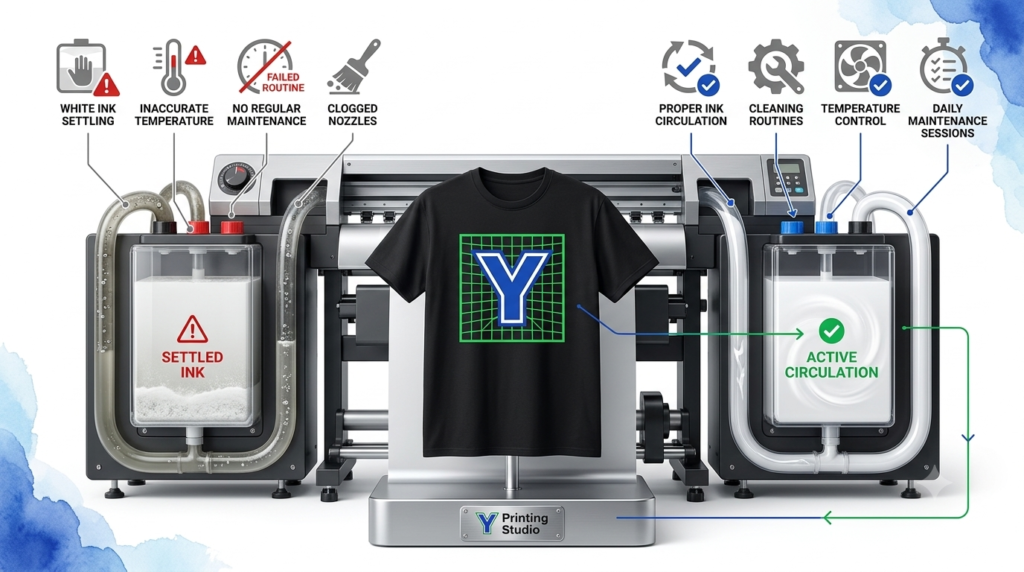
Unlike CMYK inks, white DTF ink contains heavier titanium dioxide pigments that naturally sink over time when left undisturbed. This behavior is normal, but if it isn’t properly managed, it can quickly affect your print quality and production efficiency.
The good news is that you don’t need an expensive service technician to solve the problem. These seven easy solutions will help you maintain consistent ink flow, reduce maintenance headaches, and keep your DTF production running smoothly.
Why Does White Ink Settle Faster Than Other Inks?
White ink is fundamentally different from other colors.
Most white DTF inks use titanium dioxide particles to create opacity. These particles are significantly heavier than the pigments found in cyan, magenta, yellow, and black inks.
Over time, gravity naturally causes these particles to separate.
This settling process may lead to:
- Clogged print heads
- Poor white underbase coverage
- Faded colors
- Ink circulation problems
- Expensive printer repairs
Understanding this process is the first step toward solving the issue.
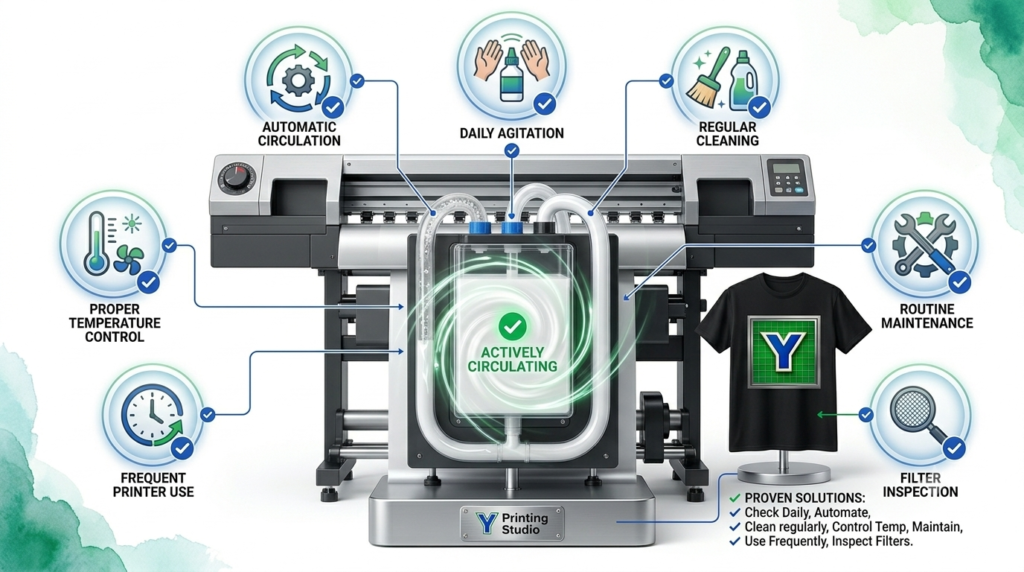
1. Activate Your Ink Circulation System Daily
Modern DTF printers often include automatic circulation systems.
However, many users mistakenly disable them.
Allow your circulation system to run as recommended by your manufacturer.
Benefits include:
- Even pigment distribution
- Reduced sediment buildup
- Improved print consistency
- Better white opacity
Even a few minutes of daily circulation can make a significant difference.
2. Shake White Ink Bottles Before Refilling
Never pour white ink directly into your tanks after long storage periods.
Before refilling:
- Close the cap securely
- Gently shake the bottle for 30–60 seconds
- Ensure pigments are fully mixed
Avoid aggressively shaking, as excessive air bubbles can create additional printing problems.
This simple habit greatly reduces sediment entering your printer.
3. Print Something Every Day
DTF printers perform best when they remain active.
Long periods of inactivity accelerate settling.
Even printing a small nozzle check pattern daily helps.
Daily Maintenance Examples
Print:
- A nozzle test
- A maintenance strip
- A small sample graphic
Consistent movement keeps ink flowing through the system.
4. Maintain Proper Room Temperature
Environmental conditions matter more than many users realize.
Ideal operating conditions:
- Temperature: 68°F–77°F
- Humidity: 45%–60%
Extremely cold environments can increase ink thickness.
Extremely hot environments may affect consistency.
Stable environments support healthier ink flow.
5. Clean Your Print Heads Regularly
Poor maintenance quickly compounds settling issues.
Create a cleaning schedule.
Recommended Routine
Daily:
- Nozzle check
Weekly:
- Light cleaning cycle
Monthly:
- Deep inspection
Avoid excessive cleaning cycles because they waste ink.
Preventative maintenance is more effective than reactive maintenance.
6. Use High-Quality White DTF Ink
Not all white inks are created equally.
Premium white ink offers:
- Better pigment suspension
- Improved flow consistency
- Reduced clogging risk
- Longer shelf stability
Cheap inks may save money initially but often create larger expenses later.
This is one of the biggest lessons when learning Why White Ink Settles in DTF Printers.
7. Don’t Let Your Printer Sit Unused for Days
Extended downtime is one of the leading causes of severe settling.
If you’ll be away for several days:
- Run circulation cycles
- Print maintenance pages beforehand
- Follow manufacturer storage procedures
Businesses that print consistently experience fewer issues.
Even low-volume shops benefit from a regular schedule.
Warning Signs That White Ink Is Beginning to Settle
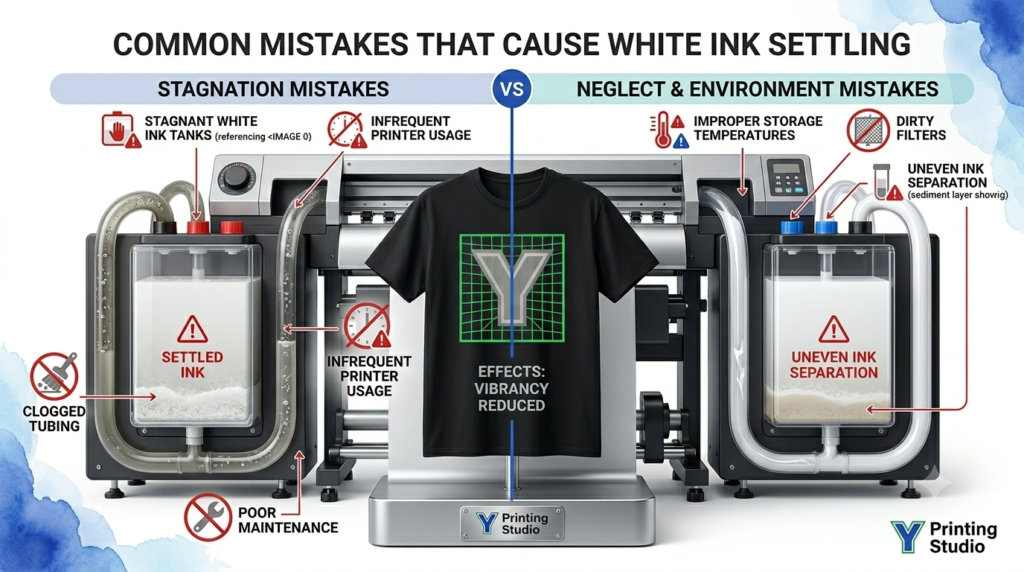
Watch for these symptoms:
⚠️ Colors appear faded
⚠️ White areas look transparent
⚠️ Missing lines during nozzle checks
⚠️ Uneven print textures
⚠️ Increased cleaning cycles
Early detection prevents larger problems.
Build a Preventative Maintenance Routine
The easiest way to avoid future problems is consistency.
Create a checklist:
Daily:
✅ Print nozzle test
✅ Run circulation
Weekly:
✅ Clean print heads
✅ Inspect ink tanks
Monthly:
✅ Deep maintenance inspection
Professional businesses rely on routines rather than emergency fixes.
Protect Your Entire DTF Workflow
White ink is only one piece of successful production.
Your complete system should include:
- High-quality DTF film
- Reliable DTF inks
- Proper adhesive powder
- Correct heat press settings
- Routine printer maintenance
At Y Printing, we emphasize complete workflows because consistency produces professional results.
Understanding Why White Ink Settles in DTF Printers helps reduce downtime, lower costs, and improve customer satisfaction.
RELATED Y PRINTING RESOURCES
- Browse our DTF Transfers collection for ready-to-press designs.
- Explore our DTF Film Products for reliable print consistency.
- Read our DTF Ink Guide to improve overall production quality.
- Learn from our Polyamide Powder Guide for stronger adhesion.
- Discover more About Us and our expertise in apparel decoration.
- Scale your business with Custom Printing Solutions.
INDUSTRY REFERENCES
Helpful educational resources:
Learning Why White Ink Settles in DTF Printers is essential for every DTF business owner.
Settling is a natural process caused by heavier pigments, but it doesn’t have to become an expensive problem.
By maintaining circulation, printing daily, controlling your environment, and using quality supplies, you can dramatically improve printer performance.
At Y Printing, we believe preventative maintenance is one of the easiest ways to reduce downtime and increase profitability.
Small daily habits today can save hundreds of dollars in repairs tomorrow.
FREQUENTLY ASKED QUESTIONS
Is it normal for white DTF ink to settle?
Yes. White ink naturally settles because titanium dioxide pigments are heavier than other color pigments.
How often should I circulate white ink?
Daily circulation is highly recommended to maintain consistency.
Can settled white ink damage my printer?
Yes. Severe settling can eventually contribute to clogged print heads and poor print quality.
Should I shake white ink bottles before refilling?
Absolutely. Gently shake bottles for 30–60 seconds before use.
How do professionals prevent white ink settling?
They use daily maintenance routines, proper environmental controls, and high-quality ink products.