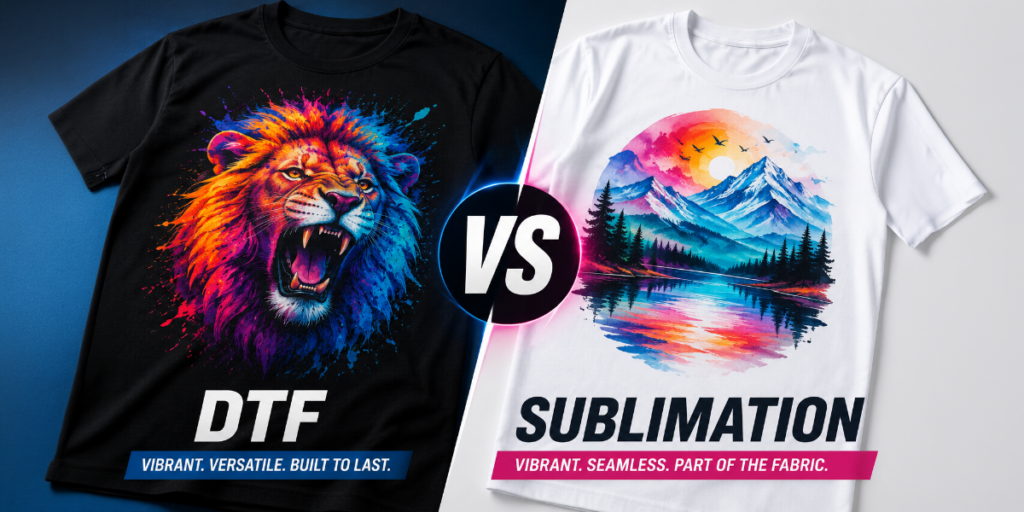
DTF vs Sublimation: 7 Key Differences Explained
If you’re researching custom apparel printing, you’ve likely come across two of the most popular methods available today: Direct-to-Film (DTF) printing and sublimation printing.
Both methods can produce vibrant, professional-quality designs, but they work very differently and are best suited for different applications.
Understanding the differences between Sublimation vs DTF can help you choose the right printing method for your business, products, and customers.
In this guide, we’ll compare DTF and sublimation across seven key categories including fabric compatibility, durability, startup costs, print quality, and versatility.
What Is DTF Printing?
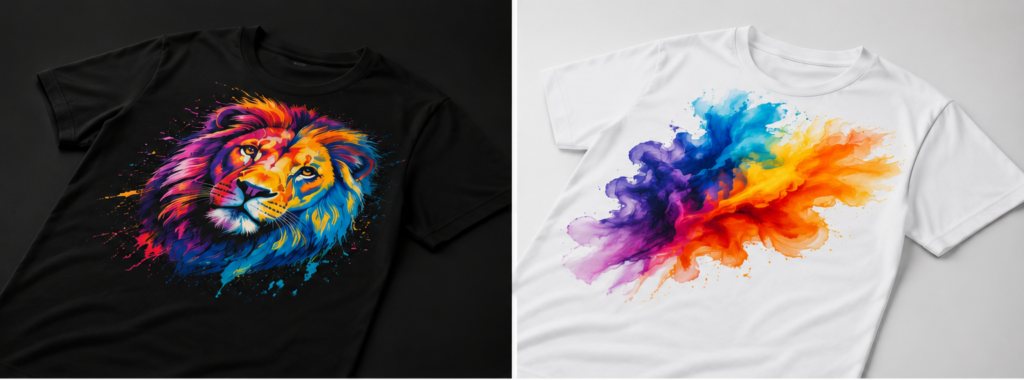
DTF printing involves printing a design onto specialized film using DTF ink. Adhesive powder is applied to the printed design, cured, and then heat pressed onto a garment or product.
DTF has become extremely popular because it can be applied to a wide variety of materials while maintaining excellent color quality and durability.
Common DTF applications include:
- T-shirts
- Hoodies
- Tote bags
- Workwear
- Team apparel
- Promotional products
What Is Sublimation Printing?
Sublimation printing uses heat to convert sublimation ink into a gas that permanently bonds with polyester fibers or sublimation-coated surfaces.
Instead of sitting on top of the material, the design becomes part of the substrate itself.
Popular sublimation products include:
- Polyester shirts
- Mugs
- Tumblers
- Mousepads
- Metal photo panels
- Promotional items
1. Fabric Compatibility
This is often the biggest difference when comparing Sublimation vs DTF.
DTF Printing
Works on:
- Cotton
- Polyester
- Blends
- Canvas
- Performance fabrics
Sublimation Printing
Works best on:
- 100% polyester
- High-polyester blends
- Sublimation-coated products
Winner: DTF
DTF offers significantly more flexibility when decorating garments.
2. Color Vibrancy
Both methods produce vibrant colors, but each excels in different situations.
DTF
Produces bright, opaque colors on both light and dark garments.
Sublimation
Produces extremely vibrant colors on white or light-colored polyester.
Winner: Tie
Both methods can achieve outstanding color results when used correctly.
3. Durability
Durability is a major consideration for apparel businesses.
DTF
High-quality transfers can withstand dozens of wash cycles while maintaining strong adhesion.
Sublimation
Because the ink becomes part of the material, sublimation offers exceptional long-term durability.
Winner: Sublimation
Sublimation generally has a slight advantage in longevity.
4. Startup Costs
Startup costs vary depending on equipment and production volume.
DTF Startup Requirements
- DTF printer
- DTF film
- DTF ink
- Polyamide powder
- Heat press
Sublimation Startup Requirements
- Sublimation printer
- Sublimation ink
- Transfer paper
- Heat press
Winner: Sublimation
Entry-level sublimation setups are often less expensive.
5. Product Versatility
Versatility affects the types of customers and products you can serve.
DTF
Excellent for apparel and textiles.
Sublimation
Excellent for both apparel and hard goods.
Winner: Tie
Each method offers unique opportunities.
6. Ease of Use
Learning curves vary between printing methods.
DTF
Requires management of film, powder, curing, and transfer application.
Sublimation
Requires proper color management and substrate selection.
Winner: Sublimation
Many beginners find sublimation slightly easier to learn.
7. Dark Garment Printing
Dark garments remain one of the biggest distinctions between these methods.
DTF
Works exceptionally well on dark fabrics.
Sublimation
Performs poorly on dark garments without specialized workarounds.
Winner: DTF
DTF is the clear choice for dark apparel.
DTF vs Sublimation: Which Method Is Better?
The answer depends on your goals.
Choose DTF if you:
- Print on cotton
- Need dark garment compatibility
- Want maximum apparel flexibility
- Sell custom clothing
Choose sublimation if you:
- Primarily print polyester
- Create hard goods and promotional products
- Want maximum print longevity
- Focus on light-colored products
Many successful businesses use both methods to expand their product offerings.
| Feature | DTF | Sublimation |
| Cotton Printing | ✅ | ❌ |
| Polyester Printing | ✅ | ✅ |
| Dark Garments | ✅ | ❌ |
| Hard Goods | Limited | ✅ |
| Durability | Excellent | Excellent |
| Startup Cost | Higher | Lower |
| Versatility | Excellent | Excellent |
When comparing Sublimation vs DTF, neither method is universally better.
DTF offers unmatched flexibility for apparel printing, while sublimation excels on polyester garments and coated hard goods.
Understanding the strengths of each process allows businesses to choose the best solution for their products, customers, and production goals.
Ready to Upgrade Your Printing Setup?
Y Printing offers premium DTF supplies, sublimation ink, custom transfers, and apparel solutions to help businesses create professional-quality products with confidence.