
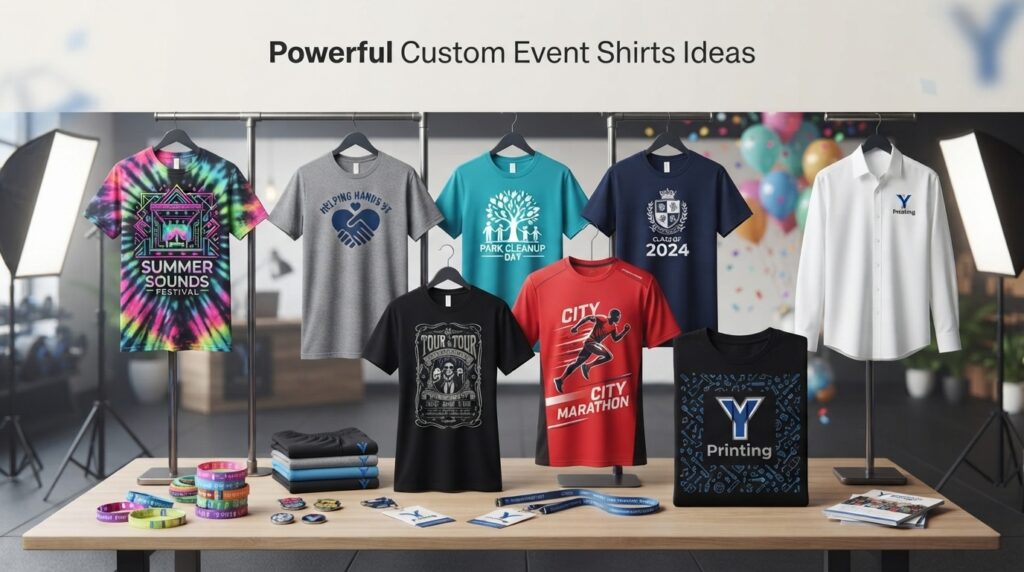
Powerful Custom Event Shirts Ideas
What makes an event memorable long after the final guest leaves? Often, it is the small details that people can take home, wear again, and share with others. Custom Event Shirts are one of the most practical ways to create that lasting connection while giving your event a recognizable identity.
Whether you are organizing a charity fundraiser, family reunion, school event, company gathering, tournament, festival, or community celebration, the right shirt can turn attendees into walking reminders of the occasion.
But simply putting a logo and date on a T shirt is not always enough. Design, garment choice, personalization, and print quality all influence whether people actually want to wear the shirt.
In this guide, we will explore seven practical and creative Custom Event Shirts ideas, along with tips for choosing designs and printing methods that help you avoid costly mistakes and create apparel people will be excited to wear.
Why Custom Event Shirts Make Events More Memorable
Event apparel serves a purpose beyond decoration. A well designed shirt can help create a sense of belonging among attendees while also extending the visibility of the event after it ends.
For organizations, shirts can also provide valuable branding opportunities. Someone wearing your event shirt weeks later can introduce your organization or event to an entirely new audience.
Custom shirts are especially useful for:
- Charity and fundraising events
- School functions
- Sports tournaments
- Corporate events
- Family reunions
- Festivals and community events
- Church and nonprofit gatherings
- Conferences and networking events
The key is to create something attendees genuinely want to wear. A thoughtful design can make the shirt feel like a keepsake rather than another piece of event merchandise.
1. Create a Strong Event Identity
One of the most effective approaches is to build the shirt around the event’s visual identity.
Start with the elements people should immediately associate with the occasion:
- Event name
- Year or anniversary
- Logo
- Signature colors
- Location
- Event theme
- Short slogan
For example, a community festival might feature a bold illustration of a local landmark combined with the event name and year. A corporate event could use a clean logo treatment with a memorable theme or company message.
Avoid trying to put every piece of information on the front. Strong event apparel usually benefits from a clear visual hierarchy.
A simple front design paired with a larger back graphic can often look more professional than a crowded design.
2. Design Custom Event Shirts for Teams
Large events frequently involve groups of people performing different roles. Custom apparel can help distinguish those groups while creating a unified appearance.
Consider creating variations for:
- Event staff
- Volunteers
- Sponsors
- Performers
- Coaches
- Participants
- Organizers
You do not necessarily need an entirely different design for each group. Instead, keep the main artwork consistent and change a small element such as the title on the back.
For example, everyone could wear the same event logo while staff shirts say “EVENT CREW” and volunteers say “VOLUNTEER.”
This approach keeps the event visually coordinated without making production unnecessarily complicated.
3. Turn the Shirt Into a Personalized Keepsake
Personalization can make event apparel significantly more meaningful.
Instead of giving everyone the exact same shirt, consider adding individual details where practical.
Ideas include:
- First names
- Team names
- Participant numbers
- Graduation years
- Locations
- Special roles
- Milestone achievements
Personalized shirts work particularly well for family reunions, sports events, school celebrations, and milestone gatherings.
For larger orders, however, personalization requires careful production planning. Each variation should be reviewed before printing to minimize errors.
This is where a reliable print workflow becomes important. Consistent artwork preparation, organized files, and clear size and quantity lists can help improve efficiency when producing multiple versions.
4. Use Custom Event Shirts for Fundraising
Fundraising events provide another excellent opportunity for custom apparel.
A compelling shirt can become both a promotional tool and an additional source of revenue. Rather than treating the shirt as something every attendee automatically receives, consider offering it as merchandise.
A strong fundraising shirt should communicate the cause quickly.
Consider including:
- The organization’s name
- A recognizable symbol
- A short message
- The event year
- A meaningful statistic or phrase
- A website or social media handle when appropriate
Keep the design wearable outside the event itself. A shirt that looks like everyday apparel has a better chance of being worn repeatedly, extending the life of the campaign.
For organizations ordering in volume, bulk production can also make the economics of event merchandise more attractive.
5. Create Limited Edition Event Designs
Scarcity can make event apparel feel more special.
Consider creating a limited edition design specifically for a particular year, anniversary, tournament, or milestone.
Examples include:
- “10th Annual”
- “25 Years”
- “Class of 2026”
- “2026 Championship”
- “Founding Year Anniversary”
- “Special Edition”
This approach works especially well for recurring events. Each year’s shirt becomes a snapshot of that particular occasion.
For long running events, participants may eventually collect multiple designs. That can turn custom apparel into part of the event’s culture rather than simply another promotional item.
6. Match the Shirt to the Event Experience
The best Custom Event Shirts usually reflect the personality of the event.
A formal corporate conference may call for a minimalist design and premium looking garment. A summer festival could use vibrant artwork and a relaxed shirt style. A charity 5K might benefit from energetic graphics and participant focused messaging.
Think about the event before choosing the shirt.
Consider these design factors
Audience: What will attendees actually want to wear?
Environment: Will the event take place outdoors, indoors, or in hot weather?
Garment: Is a standard T shirt appropriate, or would polos, tank tops, hoodies, or performance apparel work better?
Design: Should the artwork feel professional, playful, athletic, nostalgic, or modern?
Print placement: Will the design be on the front, back, sleeve, or multiple locations?
The goal is to make the apparel feel like part of the event experience rather than an afterthought.
7. Build Designs That Work Beyond One Event
A particularly powerful strategy is designing event apparel that remains useful after the event.
Instead of making the shirt completely dependent on a specific date, consider emphasizing the organization’s identity and using the event details as a secondary element.
For example, a charity could place its recognizable logo and slogan prominently on the front while placing the specific fundraiser name and year on the back.
This creates a shirt that can still promote the organization long after the event.
It also gives attendees a reason to wear it again.
When planning the artwork, think about how the design will look from a distance, in photographs, and in social media posts. A clean, recognizable graphic often performs better visually than a design overloaded with text.
Choosing the Right Printing Method
Once your design is ready, the next decision is determining how it should be produced.
For many custom apparel projects, Direct to Film printing offers flexibility for detailed, colorful artwork and different garment types. DTF transfers can be prepared from digital artwork and applied to compatible apparel using a heat press.
The best approach depends on factors such as:
- Quantity
- Number of colors
- Artwork complexity
- Garment material
- Number of design variations
- Desired turnaround time
- Budget
For smaller or highly customized orders, digital transfer methods can provide useful flexibility. Larger recurring programs may benefit from evaluating several production methods based on volume and consistency.
Y Printing supports both customers ordering finished custom apparel and businesses developing their own apparel production workflow, making print method selection an important part of the overall process.
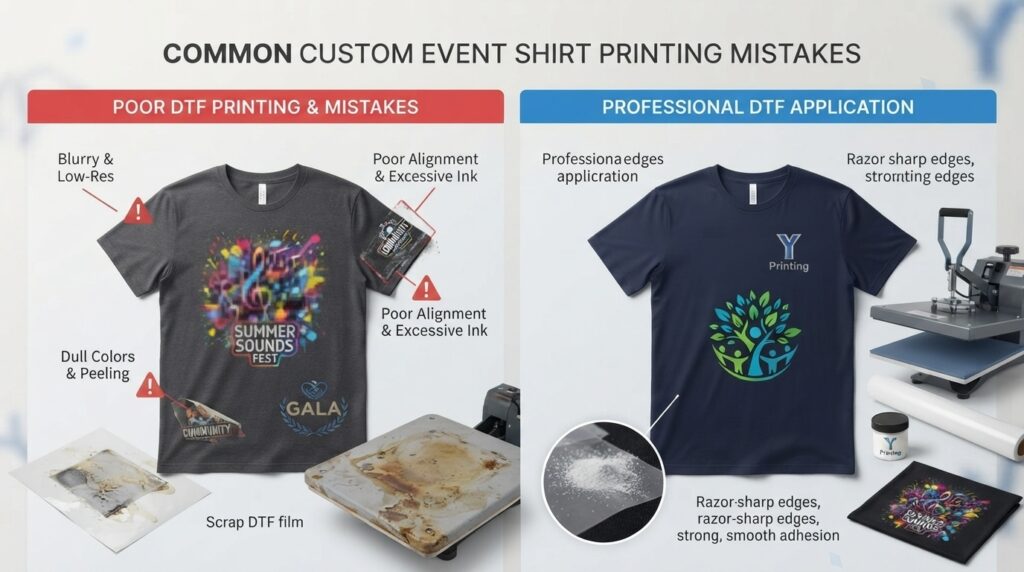
How to Avoid Common Event Shirt Mistakes
Even a great concept can become a disappointing product if the production details are overlooked.
Before approving an order, check:
Artwork
Make sure logos, text, dates, and names are correct. Verify spelling carefully, especially when working with personalized designs.
Sizing
Do not assume every attendee wants the same shirt size. Gather quantities early and create a clear size breakdown.
Garment selection
Consider whether the shirt will be comfortable for the event environment. Outdoor summer events may require lighter garments, while cooler events may justify heavier apparel.
Print placement
Make sure artwork is appropriately sized for the garment. A graphic that looks good on a digital mockup may feel oversized or undersized when printed.
Timing
Do not wait until the last minute. Build time into the schedule for artwork approval, production, quality control, and distribution.
A structured production checklist can help improve efficiency and reduce avoidable reprints.
Continue Exploring Y Printing Resources
Once your event concept and apparel strategy are established, the next step is making sure your production process can deliver consistent results.
Y Printing’s DTF Transfers and apparel printing options can help you explore finished transfer and custom apparel solutions for event projects. Y Printing also offers DTF printing supplies, including ink, film, and other production materials for businesses managing their own workflow.
For businesses producing event apparel themselves, the broader selection of DTF supplies and printing equipment can help create a more complete production workflow.
If you are looking beyond a single event, exploring Custom Printing Solutions can also help you think about how the same production setup could support uniforms, promotional products, team apparel, and future campaigns.
Industry References
For additional education about apparel decoration and the printing industry, these organizations are useful starting points.
- PRINTING United Alliance provides industry education, research, events, and resources covering apparel decoration and other print markets. Its resources include dedicated apparel decoration programming and industry research.
- Epson Print Technology is another useful resource for learning about professional printing technologies and equipment.
The right Custom Event Shirts can do much more than identify attendees. They can strengthen an event’s identity, bring groups together, support fundraising, create lasting memories, and keep your organization visible long after the event ends.
The most successful designs begin with the audience and purpose. Think about who will wear the shirt, what they will remember about the event, and whether they would want to wear the design again.
From team apparel and personalized keepsakes to limited edition designs and fundraising merchandise, there are plenty of ways to make event apparel more meaningful.
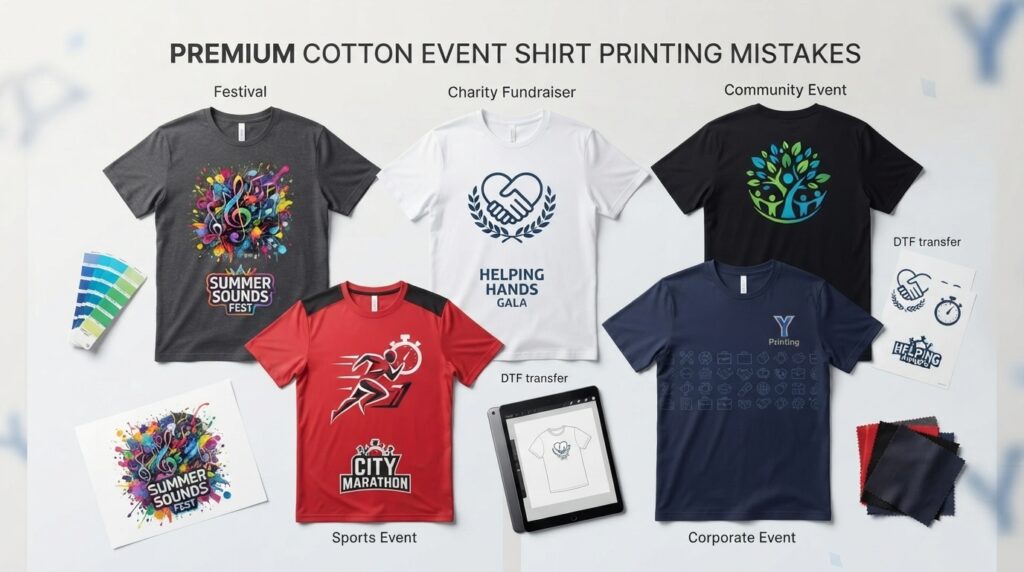
With thoughtful design, appropriate garments, reliable printing, and careful production planning, Custom Event Shirts can become one of the most memorable parts of the entire event.
Frequently Asked Questions
What are the best events for custom shirts?
Custom shirts work well for fundraisers, festivals, corporate gatherings, school events, sports tournaments, family reunions, conferences, and community celebrations.
How early should I order custom event shirts?
Ideally, begin planning several weeks before the event. This allows time for artwork approval, collecting sizes, production, quality control, and distribution.
Can custom event shirts include individual names?
Yes. Names, numbers, team designations, and other personalized elements can be incorporated into many apparel projects. Larger personalized orders require careful file and quantity management.
What printing method is best for event shirts?
There is no single best method for every project. Quantity, artwork complexity, garment material, personalization, budget, and turnaround requirements should all be considered before selecting a production method.
How can I make event shirts people actually want to wear?
Focus on wearable designs rather than treating the shirt like a billboard. Use attractive graphics, comfortable garments, clear typography, and event details that feel meaningful rather than excessive.