
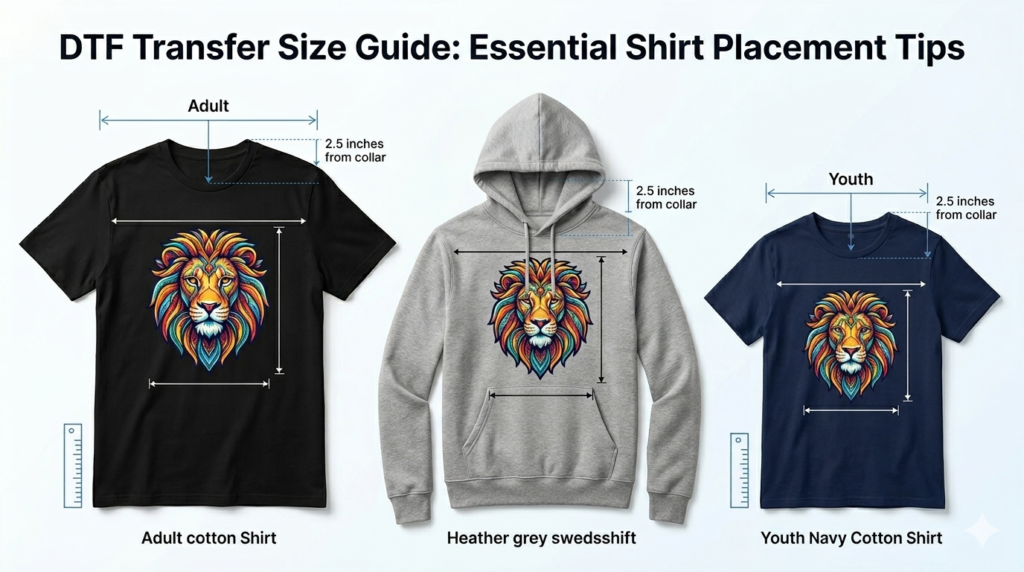
DTF Transfer Size Guide: Useful Essential Shirt Placement Tips
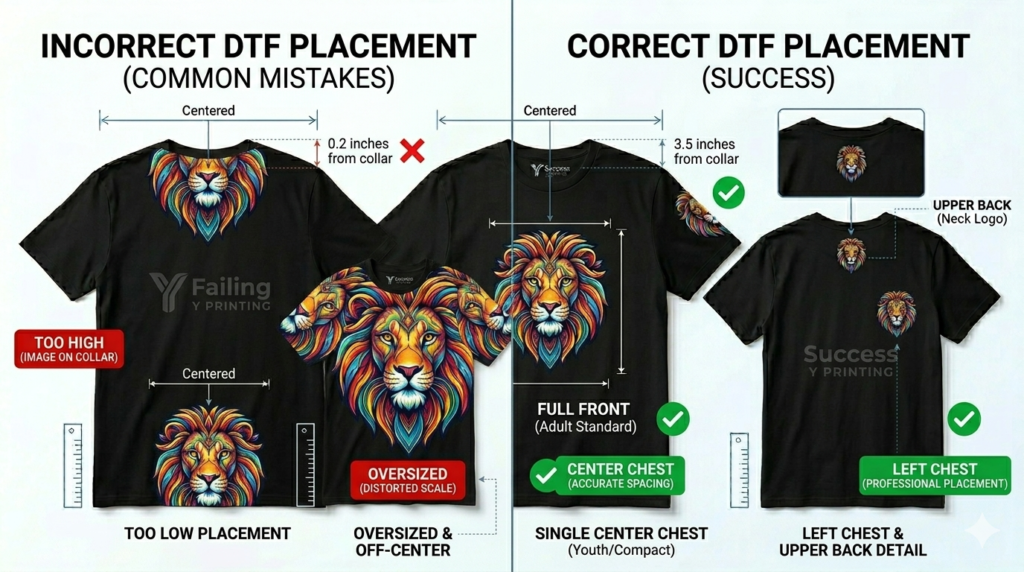
One of the easiest ways to make a custom shirt look unprofessional is by placing a perfectly good design in the wrong location or choosing the wrong size. Even high-quality prints can appear awkward if they are too large, too small, or poorly positioned.
That’s why every apparel decorator needs a reliable DTF Transfer Size Guide.
Whether you’re creating custom business shirts, event apparel, school spirit wear, sports uniforms, or retail merchandise, proper sizing dramatically improves the final product. It also reduces costly mistakes, material waste, and customer complaints.
The good news is that shirt placement is easier than many people think. Once you understand a few standard measurements and design principles, you can create professional-looking garments consistently.
This DTF Transfer Size Guide will walk you through common shirt placements, recommended design sizes, and practical tips that every beginner and experienced print shop owner should know.
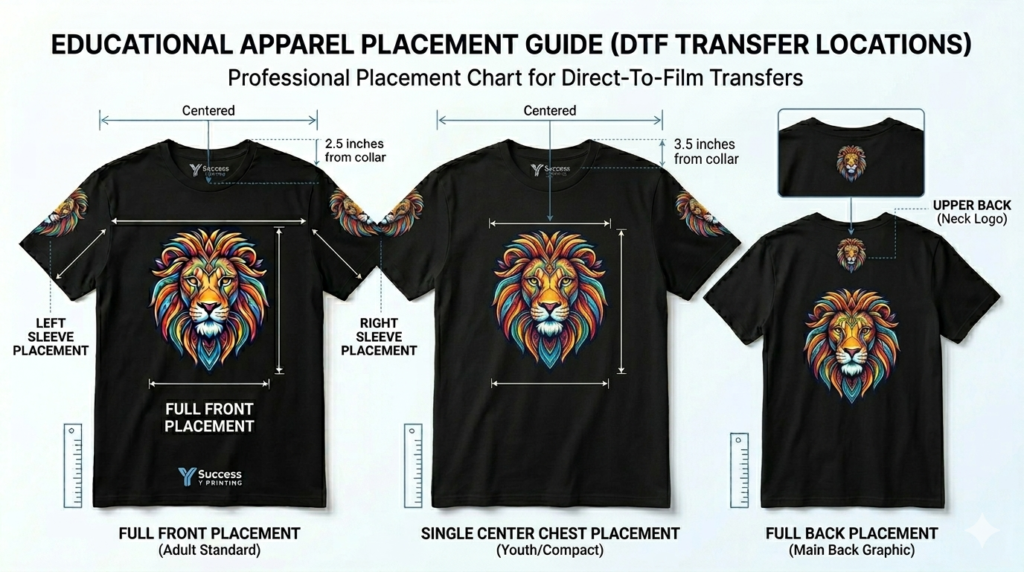
Why Proper DTF Transfer Placement Matters
Customers may not immediately notice perfect placement, but they will absolutely notice bad placement.
Incorrect sizing can cause:
- Crowded designs
- Oversized graphics
- Unbalanced apparel
- Poor customer perception
Proper placement creates:
- Better visual appeal
- Improved brand presentation
- Professional consistency
- Higher customer satisfaction
A dependable DTF Transfer Size Guide helps standardize your production process.
Standard Full Front DTF Transfer Sizes
Full front designs are among the most common applications.
Recommended Sizes
Youth Small–Medium:
- 8″ x 8″
Youth Large:
- 9″ x 9″
Adult Small–Medium:
- 10″ x 10″
Adult Large–XL:
- 11″ x 11″
Adult 2XL–5XL:
- 12″ x 12″
Always scale proportionally based on garment size.
Avoid using one universal size for every shirt.
Left Chest Placement Measurements
Left chest logos are popular for:
- Company uniforms
- Employee apparel
- Polo shirts
- Business branding
Standard Left Chest Size
Recommended design size:
3″–4″ wide
Placement:
7–9 inches down from the shoulder seam
Position:
3–4 inches from the center line
Small adjustments make a huge difference.
Back Design Size Recommendations
Large back designs work extremely well for promotional apparel.
Common uses include:
- Sports teams
- Events
- Schools
- Restaurants
- Contractors
Standard Back Sizes
Youth:
9″–10″
Adult:
11″–12″
Large apparel:
12″–13″
Avoid placing designs too close to the collar.
Leave enough breathing room.
Sleeve Print Placement Guide
Sleeve prints continue growing in popularity.
Popular applications:
- Brand logos
- Social media handles
- Flag designs
- Sports numbers
Standard Sleeve Measurements
Width:
2″–4″
Distance from shoulder seam:
2–3 inches
Simple sleeve designs often create premium-looking apparel.
Pocket Area and Small Print Placement
Small prints add subtle branding opportunities.
Perfect for:
- Coffee shops
- Corporate apparel
- Retail brands
- Boutique businesses
Recommended size:
3″ x 3″
or
4″ x 4″
Minimal designs often perform best here.
Don’t Forget Shirt Size Differences
One of the biggest mistakes is using identical transfers for every garment.
A youth small shirt and a 4XL shirt require different proportions.
General Scaling Rule
Youth apparel:
Reduce by 20–30%
Adult small–large:
Standard sizing
Adult XL–5XL:
Increase by 10–20%
This is where a DTF Transfer Size Guide becomes extremely valuable.
Use Templates to Standardize Production
Successful businesses rely on systems.
Create reusable templates for:
- Youth shirts
- Adult shirts
- Hoodies
- Crewnecks
- Performance apparel
Benefits include:
- Faster production
- Reduced errors
- Better consistency
- Easier employee training
Templates save time every day.
Pair Proper Placement With Quality Supplies
The best placement still depends on quality materials.
A complete production system includes:
- Premium transfers
- High-quality film
- Reliable inks
- Consistent adhesive powder
Every component influences the final result.
The most successful businesses treat their workflow as an ecosystem rather than individual products.
Quick DTF Transfer Size Chart
| Placement | Recommended Size |
| Left Chest | 3″-4″ |
| Full Front Youth | 8″-9″ |
| Full Front Adult | 10″-12″ |
| Full Back Youth | 9″-10″ |
| Full Back Adult | 11″-13″ |
| Sleeve Print | 2″-4″ |
| Pocket Area | 3″-4″ |
Keep this chart handy during production.
A reliable DTF Transfer Size Guide removes the guesswork from every order.
RELATED Y PRINTING RESOURCES
- Browse our DTF Transfers collection for ready-to-press designs.
- Explore our DTF Film Products for consistent print quality.
- Read our DTF Ink Guide to optimize color vibrancy.
- Learn from our Polyamide Powder Guide for better adhesion.
- Discover more About Us and our commitment to quality.
- Scale your business with Custom Printing Solutions.
INDUSTRY REFERENCES
Helpful educational resources:
A professional shirt is about more than just a beautiful design. Proper placement and sizing transform good artwork into premium-looking apparel.
Using a dependable DTF Transfer Size Guide helps create consistent results, reduces wasted materials, and increases customer satisfaction.
As your business grows, standardizing transfer sizes will save valuable production time and improve overall quality control.
At Y Printing, we believe successful apparel decoration starts with quality supplies, repeatable systems, and attention to detail.
Use this DTF Transfer Size Guide as a reference for every project and build confidence into every order you create.
FREQUENTLY ASKED QUESTIONS
What is the standard size for a DTF transfer on an adult shirt?
Most adult full-front designs range from 10″ x 10″ to 12″ x 12″.
How far down should a left chest logo be placed?
Typically 7–9 inches below the shoulder seam.
Should transfer sizes change for larger shirts?
Yes. Larger garments should have proportionally larger designs.
Can one DTF transfer size fit every shirt?
No. Different garment sizes require different design dimensions.
Why is a DTF Transfer Size Guide important?
It creates consistent placement, reduces mistakes, and improves the professional appearance of finished apparel.