
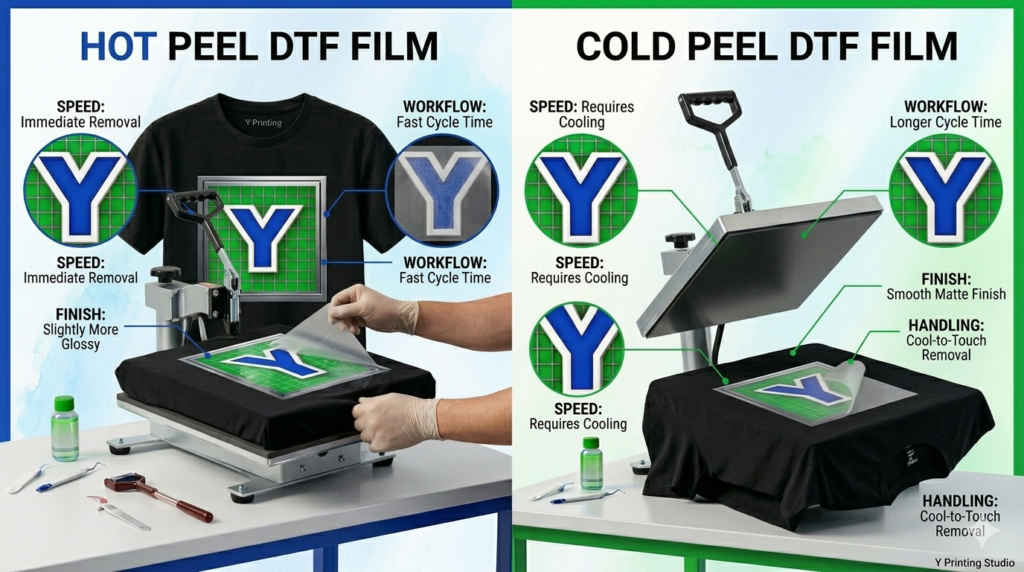
Hot Peel vs Cold Peel DTF Film: 7 Essential Differences
Choosing the right DTF film can dramatically impact your production speed, print consistency, and overall customer satisfaction. One of the biggest decisions decorators face is whether to use hot peel or cold peel film.
At first glance, they may seem nearly identical. However, each film type has unique advantages that affect workflow, application speed, and finished garment quality.
Understanding Hot Peel vs Cold Peel DTF Film helps businesses reduce mistakes, improve efficiency, and select products that align with their production goals.
Whether you operate a home business, an Etsy shop, or a high-volume print facility, choosing the proper film can save valuable time and reduce frustration.
This guide breaks down seven important differences so you can confidently decide which film is right for your operation.
What Is Hot Peel DTF Film?
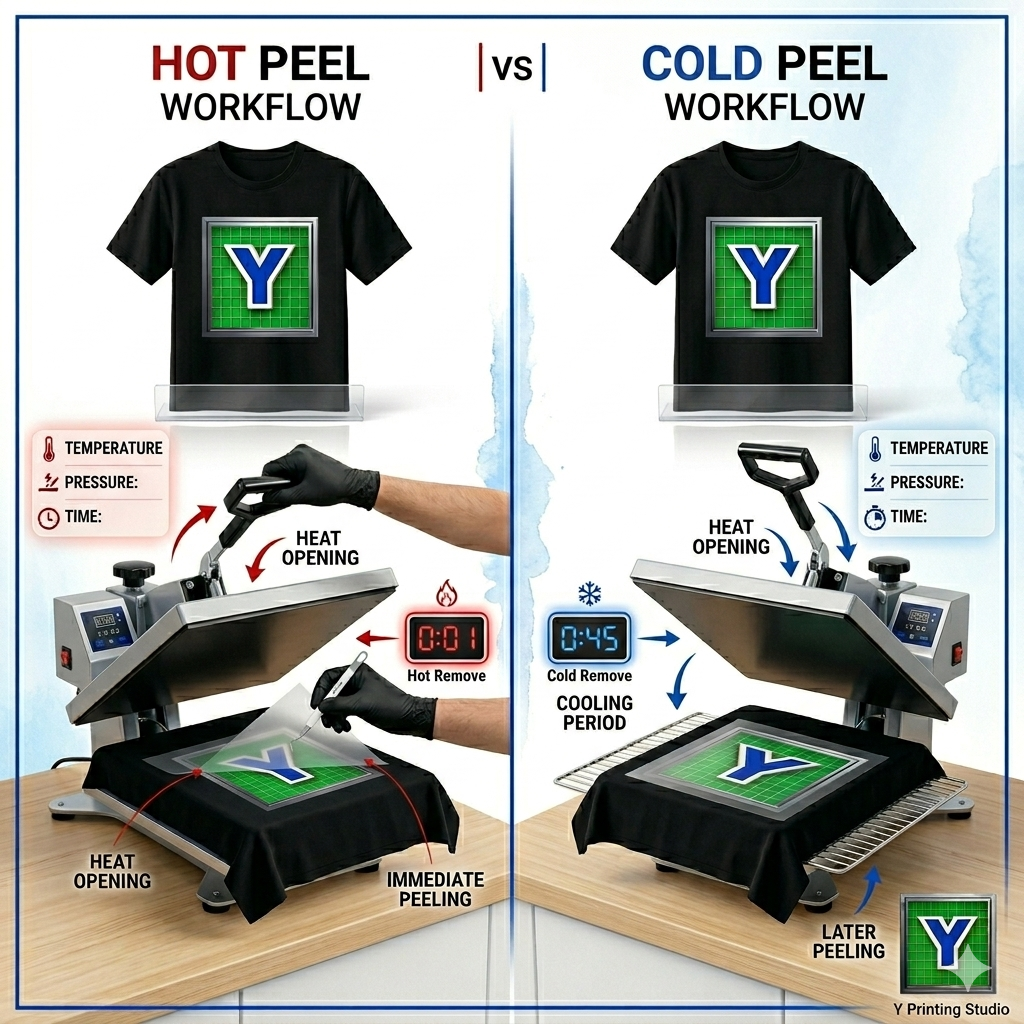
Hot peel film allows decorators to remove the carrier sheet almost immediately after pressing.
Benefits include:
- Faster production speeds
- Higher output capacity
- Shorter turnaround times
- Improved workflow efficiency
Hot peel film is especially useful for businesses processing large quantities of apparel daily.
However, timing matters.
Removing the film too aggressively may damage the transfer.
What Is Cold Peel DTF Film?
Cold peel film requires the transfer to cool before removing the carrier sheet.
Benefits include:
- Greater application control
- Reduced risk of lifting edges
- Excellent detail retention
- Consistent results for beginners
Cold peel film is often favored by smaller shops and beginners because it provides a larger margin for error.
Patience becomes part of the workflow.
Difference #1: Production Speed
Speed is often the biggest deciding factor.
Hot Peel Advantages
- Immediate film removal
- Faster production cycles
- Better for high-volume businesses
Cold Peel Advantages
- More forgiving process
- Better control
- Lower stress during application
If production volume is your priority, hot peel often wins.
Difference #2: Ease of Use for Beginners
Cold peel generally has a shorter learning curve.
Why?
Because decorators have more time to react.
Hot peel requires:
- Accurate temperatures
- Proper pressure
- Confident removal timing
Cold peel allows users to work more deliberately.
This is an important consideration when evaluating Hot Peel vs Cold Peel DTF Film.
Difference #3: Detail and Print Consistency
Both options can create outstanding results.
However, cold peel is often preferred for intricate artwork.
Examples include:
- Fine lines
- Small text
- Detailed logos
Cold peel can sometimes offer slightly more consistency for highly detailed designs.
Hot peel continues to improve as manufacturers refine their products.
Difference #4: Workflow Efficiency
Every shop has different priorities.
Hot Peel Works Best For
- Large production runs
- Corporate orders
- Sports apparel
- Event merchandise
Cold Peel Works Best For
- Small businesses
- Personalized orders
- Boutique brands
- New decorators
Choosing the right workflow matters as much as choosing the film itself.
Difference #5: Risk of Application Errors
Incorrect peeling is a common source of failure.
Hot peel mistakes include:
- Pulling too early
- Pulling too slowly
- Uneven removal
Cold peel mistakes include:
- Insufficient cooling
- Rushing the process
Following manufacturer instructions dramatically reduces problems.
This is one of the most important lessons when learning Hot Peel vs Cold Peel DTF Film.
Difference #6: Equipment Compatibility
The good news is that both film types work with most standard DTF equipment.
Your setup should include:
- Quality heat press
- Reliable printer
- Premium inks
- Proper adhesive powder
Equipment quality often matters more than film selection.
Consistency throughout your system is essential.
Difference #7: Which One Should Your Business Choose?
There is no universal winner.
The answer depends on your goals.
Choose hot peel if you prioritize:
- Production speed
- Faster order fulfillment
- High-volume output
Choose cold peel if you prioritize:
- Detail accuracy
- Learning simplicity
- Controlled workflows
Many successful businesses eventually stock both options.
This provides flexibility for different customer orders.
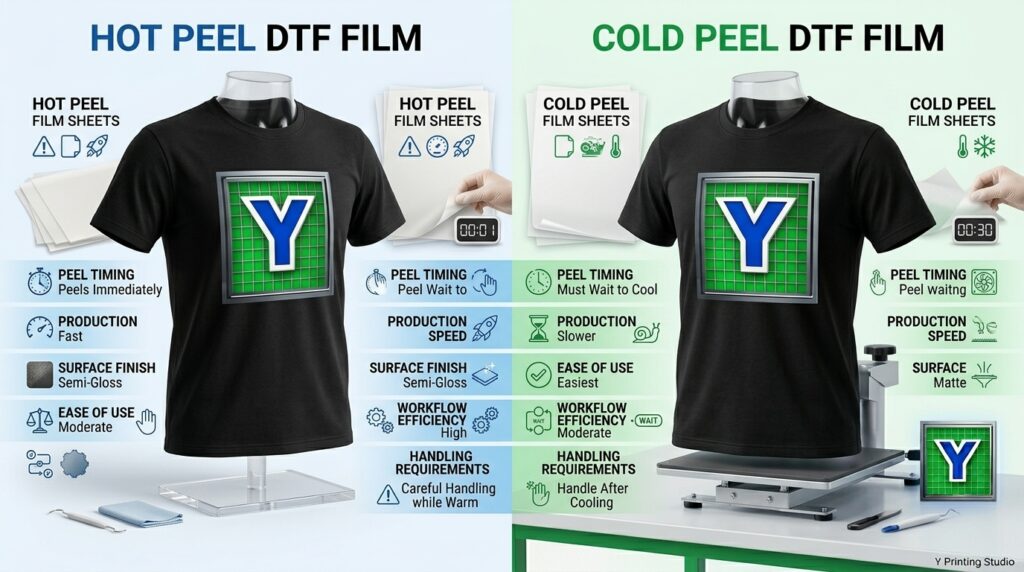
Quick Comparison Chart
| Feature | Hot Peel | Cold Peel |
| Peeling Speed | Immediate | After Cooling |
| Learning Curve | Moderate | Easy |
| Production Speed | Fast | Moderate |
| Detail Work | Excellent | Excellent |
| Workflow Efficiency | High Volume | Controlled Production |
| Beginner Friendly | Moderate | High |
This chart simplifies the Hot Peel vs Cold Peel DTF Film decision.
Build a Complete DTF Production System
Film selection is only one component of successful apparel decoration.
Your complete workflow should include:
- Premium DTF film
- Reliable transfers
- Quality inks
- Proper adhesive powder
- Consistent heat press settings
Businesses that build complete systems experience fewer production issues.
At Y Printing, we emphasize repeatable processes because consistency drives long-term growth.
RELATED Y PRINTING RESOURCES
- Browse our DTF Transfers collection for ready-to-press apparel designs.
- Explore our DTF Film Products to find the right film for your workflow.
- Read our DTF Ink Guide to improve color consistency.
- Learn from our Polyamide Powder Guide for stronger adhesion.
- Discover more About Us and our expertise in apparel decoration.
- Scale production with our Custom Printing Solutions.
INDUSTRY REFERENCES
Helpful educational resources:
Choosing between hot peel and cold peel film is not about finding a universally better product. It’s about selecting the option that best matches your workflow, experience level, and production goals.
Understanding Hot Peel vs Cold Peel DTF Film helps reduce mistakes, improve efficiency, and create more consistent results.
High-volume businesses often prefer hot peel for speed, while smaller shops and beginners may appreciate the control of cold peel.
At Y Printing, we recommend testing both options and building a production system around consistency rather than shortcuts.
The right film, combined with quality supplies and proven processes, creates apparel your customers will trust.
FREQUENTLY ASKED QUESTIONS
Is hot peel better than cold peel DTF film?
Neither is universally better. The best choice depends on your production goals.
Is hot peel faster?
Yes. Hot peel significantly speeds up production because the carrier sheet is removed immediately.
Is cold peel easier for beginners?
Yes. Cold peel offers more control and a larger margin for error.
Can both films create professional results?
Absolutely. Both produce excellent results when used correctly.
Should businesses keep both film types in stock?
Many successful businesses do because it provides flexibility for different types of orders.