
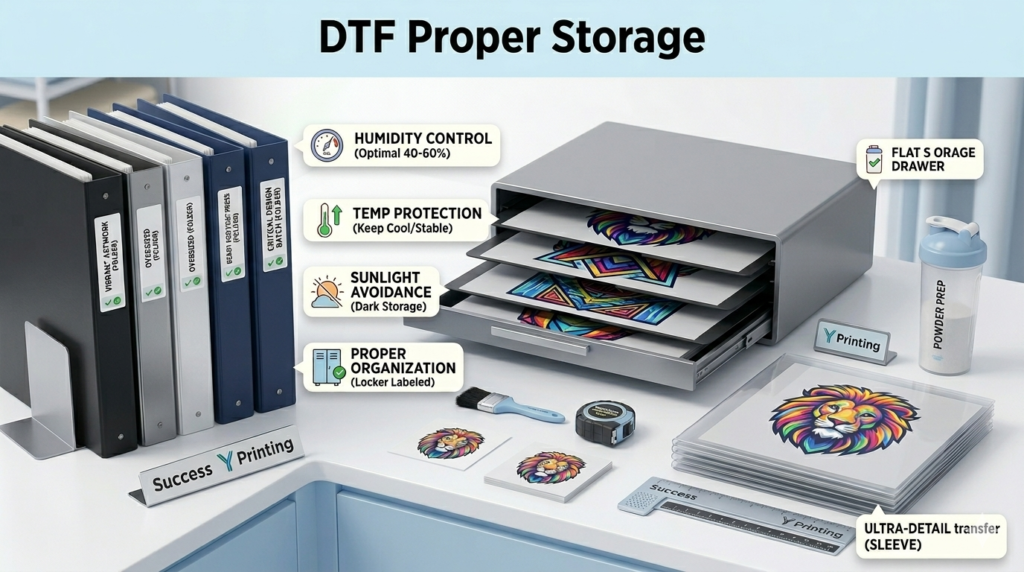
How to Store DTF Transfers: 7 Essential Tips
One of the biggest advantages of DTF printing is the ability to print transfers in advance and apply them whenever they’re needed. However, that convenience can quickly disappear if transfers are stored improperly.
Many businesses invest time and money creating high-quality transfers, only to damage them by exposing them to moisture, heat, sunlight, or poor storage conditions. The result can be curled film, weakened adhesive, or inconsistent applications.
Fortunately, learning How to Store DTF Transfers is simple.
With a few easy habits, you can extend shelf life, improve organization, and ensure your transfers remain ready to press when customers place an order.
Whether you operate a home business, an Etsy shop, or a high-volume production facility, this guide will help protect your inventory and maximize your investment.
These seven storage tips will help you create a more efficient workflow while reducing unnecessary waste.
Why Proper DTF Transfer Storage Matters
DTF transfers are durable, but they are not indestructible.
Environmental conditions directly affect their longevity.
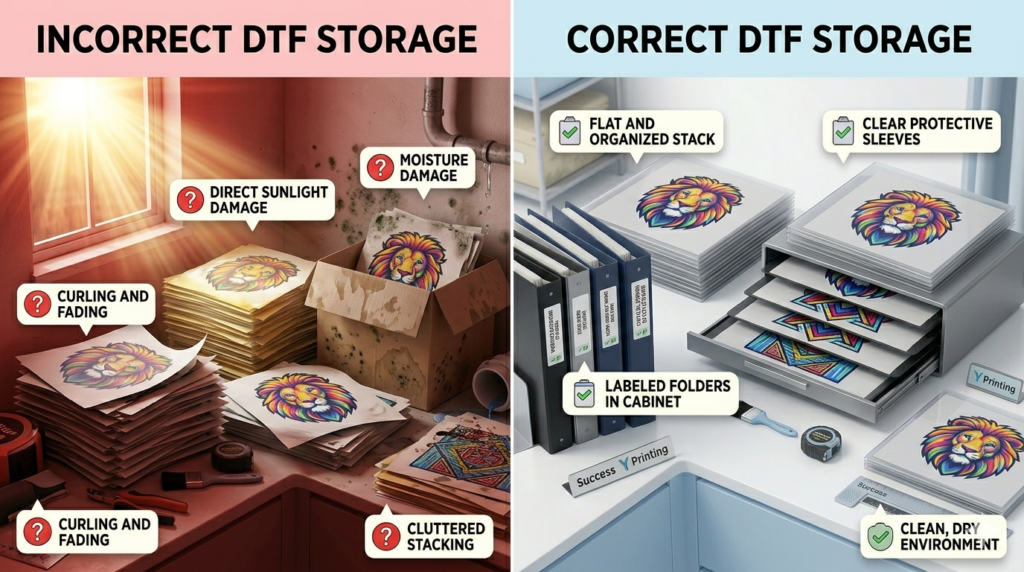
Improper storage may cause:
- Curled film
- Dust contamination
- Moisture exposure
- Adhesive degradation
- Inconsistent pressing results
Learning How to Store DTF Transfers protects both your materials and your profitability.
Good organization also speeds up production.
1. Store Transfers in a Cool, Dry Environment
Temperature and humidity matter.
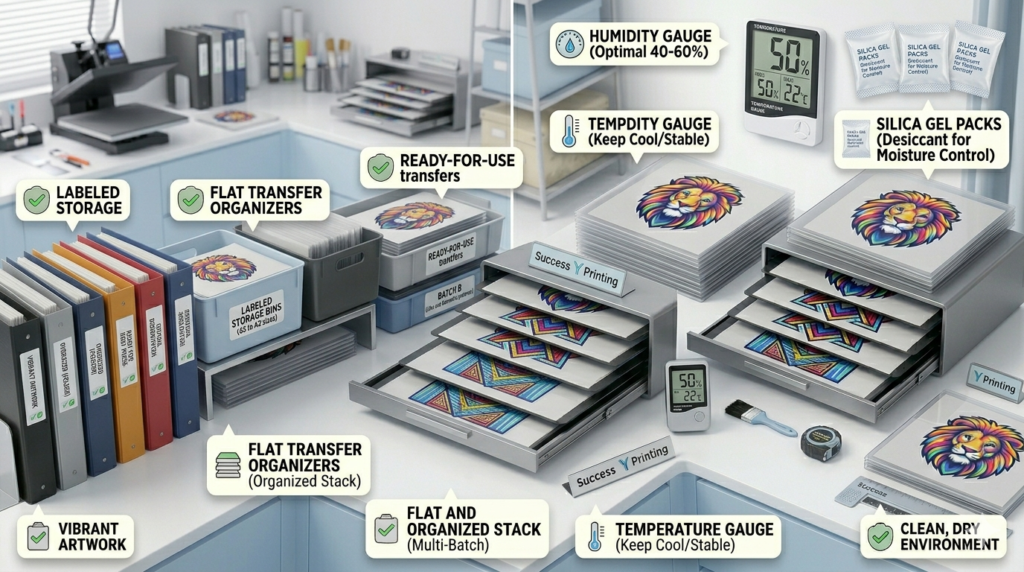
Ideal storage conditions include:
Recommended Storage Environment
Temperature:
65°F–75°F
Humidity:
40%–60%
Avoid storing transfers in:
- Garages
- Attics
- Outdoor sheds
- Direct sunlight
Climate-controlled spaces work best.
2. Keep Transfers Flat Instead of Rolling Them
One of the most common mistakes is rolling transfers for long-term storage.
This often creates:
- Curled edges
- Uneven pressing
- Difficult alignment
Instead:
- Lay transfers flat
- Use protective folders
- Store inside drawers
Flat storage helps preserve shape and adhesive performance.
3. Protect Transfers From Dust and Debris
Dust may seem harmless, but it can interfere with adhesion.
Store transfers inside:
- Plastic sleeves
- Poly bags
- Document organizers
- Storage bins with lids
Clean storage spaces improve reliability.
This is an important part of understanding How to Store DTF Transfers properly.
4. Organize Transfers by Size and Order Type
Efficient businesses rely on organization.
Sort transfers by categories such as:
- Customer name
- Shirt size
- Event type
- Design category
- Order number
Benefits include:
- Faster fulfillment
- Fewer mistakes
- Better inventory management
Labeling systems save valuable time.
5. Avoid Excessive Weight on Stored Transfers
Heavy objects can damage transfers.
Avoid stacking:
- Boxes
- Equipment
- Supplies
Excessive pressure may create:
- Film warping
- Creases
- Adhesive issues
Use shallow storage containers instead.
Protecting physical integrity is essential when learning How to Store DTF Transfers.
6. Use First-In, First-Out Inventory Management
Even though DTF transfers can last for months, inventory rotation is still important.
FIFO System
FIFO stands for:
First In, First Out.
Benefits include:
- Reduced waste
- Better organization
- Improved consistency
Label transfers with:
- Production date
- Customer name
- Order number
This simple habit prevents old inventory from accumulating.
7. Test Older Transfers Before Large Orders
If transfers have been stored for several months, test one before production.
This allows you to verify:
- Adhesive performance
- Color quality
- Durability
Testing one transfer can save an entire order.
This final step is often overlooked.
Common Storage Mistakes to Avoid
Here are the biggest mistakes businesses make:
❌ Leaving transfers in direct sunlight
❌ Storing them in humid garages
❌ Rolling transfers tightly
❌ Mixing customer orders together
❌ Allowing dust accumulation
❌ Forgetting inventory dates
Avoiding these issues dramatically improves consistency.
Build a More Efficient Production Workflow
Learning How to Store DTF Transfers is only one piece of a successful business.
Great production systems include:
- Organized storage
- Premium supplies
- Reliable equipment
- Consistent workflows
The more organized your process becomes, the faster you can fulfill customer orders.
Efficiency creates scalability.
RELATED Y PRINTING RESOURCES
- Browse our DTF Transfers collection.
- Explore our DTF Film Products.
- Read our DTF Ink Guide.
- Learn from our Polyamide Powder Guide.
- Discover more About Us.
- Scale your business with Custom Printing Solutions.
INDUSTRY REFERENCES
Helpful educational resources:
Proper storage may seem like a small detail, but it has a major impact on production quality and efficiency.
Learning How to Store DTF Transfers helps protect your investment, reduce waste, and create a smoother workflow from order to fulfillment.
Simple habits such as climate control, flat storage, organization, and inventory rotation can significantly extend the usability of your transfers.
At Y Printing, we believe consistency is what separates growing businesses from struggling ones. Proper storage is one of the easiest ways to improve your entire operation.
Use these seven tips to build a more organized, reliable, and scalable printing business.
FREQUENTLY ASKED QUESTIONS
How long can DTF transfers be stored?
Properly stored DTF transfers can often last six months to one year or longer, depending on environmental conditions.
Should DTF transfers be rolled or stored flat?
Flat storage is recommended because rolling can create curled edges.
Can humidity damage DTF transfers?
Yes. Excessive humidity may weaken adhesive performance and impact pressing quality.
Do DTF transfers expire?
They do not have a strict expiration date, but performance may decline over time.
Why is learning how to store DTF transfers important?
Proper storage protects print quality, reduces waste, and keeps transfers ready for production.