
Best Shirts for DTF Printing: 7 Essential Fabric Choices
Choosing the right garment can be the difference between a customer who orders once and a customer who comes back again and again. While DTF technology is incredibly versatile, not every shirt delivers the same print quality, durability, or feel.
When searching for the Best Shirts for DTF Printing, many businesses make the mistake of choosing based solely on price. Unfortunately, cheap blanks often result in poor adhesion, inconsistent colors, and unhappy customers.
The good news is that DTF printing works exceptionally well across multiple fabric types when paired with the right materials and application techniques.
In this guide, we’ll cover seven fabric choices that consistently produce excellent results, explain why they work, and help you avoid costly inventory mistakes. Whether you’re a print shop owner, clothing brand, Etsy seller, or apparel decorator, these recommendations will help you create higher-quality products your customers will love.
Why Fabric Selection Matters for DTF Printing
One of DTF printing’s biggest advantages is versatility.
Unlike some decoration methods that perform best on limited materials, DTF transfers adhere to various fabric blends.
However, fabric selection still affects:
- Color vibrancy
- Wash durability
- Stretch resistance
- Customer comfort
- Overall product quality
The goal is to balance print performance with customer expectations.
For example, gym apparel customers may prefer polyester blends, while lifestyle brands often choose ringspun cotton.
1. 100% Ringspun Cotton Is the Gold Standard
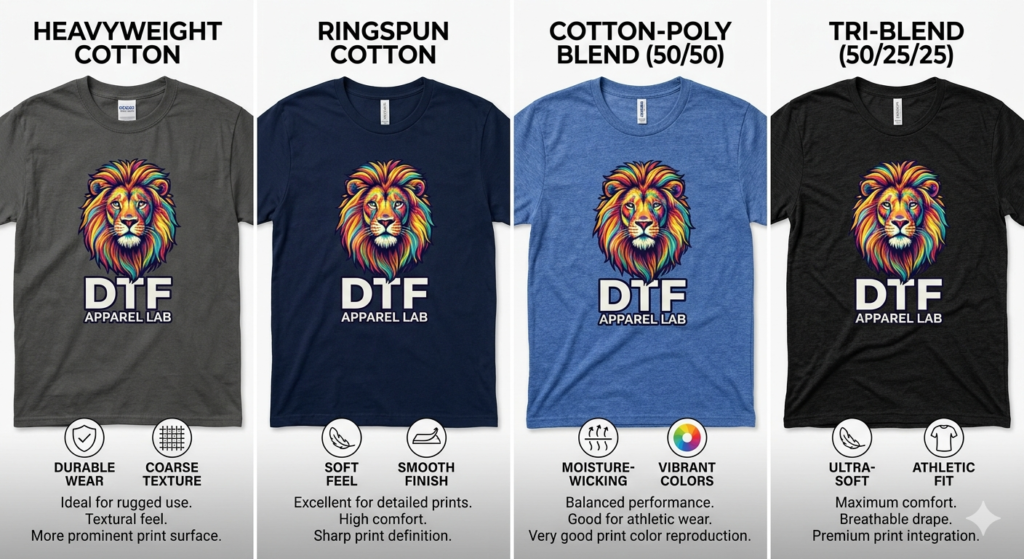
If versatility had a winner, ringspun cotton would be at the top.
Why it’s one of the best:
- Soft premium feel
- Excellent DTF adhesion
- High customer satisfaction
- Minimal print distortion
Ideal products:
- Graphic tees
- Business merchandise
- Event shirts
- Retail clothing brands
Popular shirt weights:
- 4.3 oz lightweight
- 5.3 oz standard weight
- 6 oz heavyweight
2. Cotton-Polyester Blends Offer the Best Balance
A 60/40 or 65/35 blend is one of the safest choices for businesses.
Benefits include:
- Reduced shrinkage
- Better wrinkle resistance
- Excellent durability
- Comfortable everyday wear
These blends are especially popular for:
- Corporate apparel
- Team uniforms
- School spirit wear
- Promotional merchandise
3. Tri-Blends Create Premium Retail Products
Tri-blends combine:
- Cotton
- Polyester
- Rayon
The result is an extremely soft shirt with a modern retail feel.
Advantages:
- Premium appearance
- Lightweight comfort
- Excellent drape
- Popular for fashion brands
Keep in mind that tri-blends may require slight heat adjustments due to rayon sensitivity.
4. Performance Polyester Is Perfect for Athletic Wear
DTF printing performs exceptionally well on polyester.
This has become increasingly important as activewear demand continues to grow.
Best applications:
- Gym apparel
- Running clubs
- Sports teams
- Fishing tournaments
- Corporate wellness programs
Benefits:
- Moisture-wicking
- Lightweight
- Durable
- Quick drying
Avoid excessive heat during pressing to prevent scorching.
5. Heavyweight Cotton Creates Premium Merchandise
Consumers are increasingly gravitating toward heavier garments.
Heavyweight shirts offer:
- Luxury feel
- Improved durability
- Higher perceived value
- Better retail pricing opportunities
Popular weights include:
- 6 oz
- 6.5 oz
- 7 oz
These shirts are ideal for:
- Streetwear brands
- Premium collections
- Creator merchandise
Many customers are willing to pay more for heavyweight apparel.
6. Garment-Dyed Shirts Deliver Vintage Appeal
Garment-dyed apparel has become extremely popular.
These shirts provide:
- Soft washed appearance
- Unique color variation
- Vintage aesthetics
- Premium branding opportunities
Popular uses:
- Boutique brands
- Tourist merchandise
- Coffee shops
- Lifestyle apparel companies
Always test pressing temperatures before full production.
7. Sustainable Fabrics Are Growing Fast
Eco-conscious apparel continues gaining popularity.
Sustainable options include:
- Organic cotton
- Recycled polyester
- Eco-blend fabrics
Benefits:
- Appeals to environmentally conscious consumers
- Creates premium positioning
- Differentiates your brand
Customers increasingly appreciate sustainability messaging.
Offering eco-friendly options can help businesses stand out in competitive markets.
Avoid These Common Shirt Selection Mistakes
Choosing the wrong garment can create unnecessary production issues.
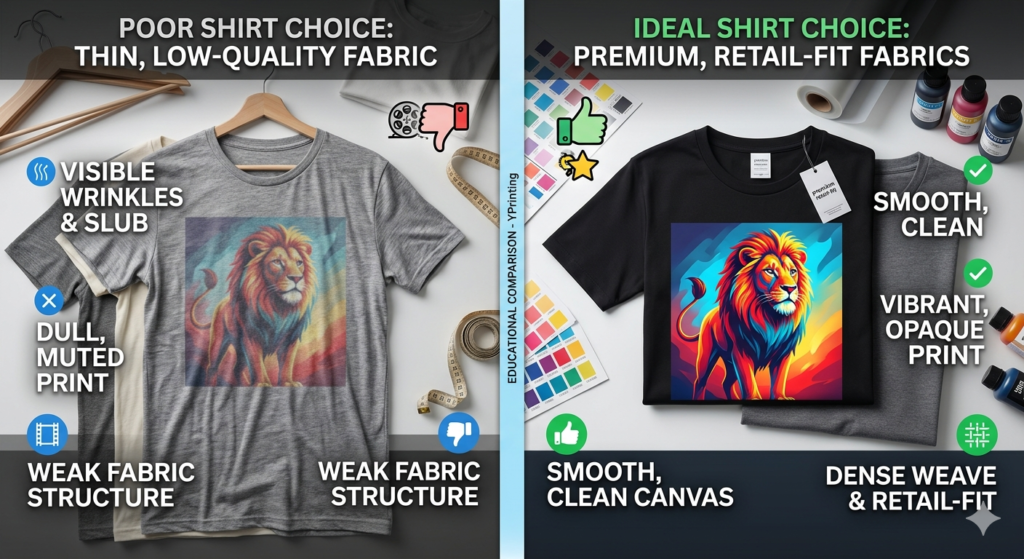
Mistake #1: Buying Based Only on Price
Cheap blanks often sacrifice quality.
Mistake #2: Ignoring Shirt Weight
Thin fabrics may show imperfections more easily.
Mistake #3: Not Testing Heat Settings
Different fabrics respond differently to heat.
Mistake #4: Offering Too Many Options
Start with a core catalog before expanding.
A simple lineup often works best:
- Standard cotton tee
- Premium heavyweight tee
- Performance shirt
- Tri-blend shirt
This covers most customer requests.
Pair Great Shirts With Great Supplies
Even the best apparel cannot compensate for poor-quality materials.
Your entire DTF system should work together.
Successful production requires:
- Quality transfers
- Premium film
- Reliable inks
- Consistent adhesive powder
Building a complete ecosystem creates repeatable results and happier customers.
RELATED Y PRINTING RESOURCES
Naturally link these resources throughout the blog:
- Browse our DTF Transfers collection
- Explore our DTF Film Products
- Read our DTF Ink Guide
- Learn from our Polyamide Powder Guide
- Discover the story behind About Us
- Scale your apparel business with Custom Printing Solutions
INDUSTRY REFERENCES
Useful industry resources:
Selecting the Best Shirts for DTF Printing isn’t about finding one perfect garment. It’s about choosing the right fabric for the right customer.
Ringspun cotton remains the industry favorite, while blends, performance fabrics, heavyweight shirts, and sustainable options all serve specific purposes.
When paired with high-quality DTF supplies, these seven fabric choices help create better-looking products, improve customer satisfaction, and increase repeat business.
At Y Printing, we believe successful printing starts with quality materials at every step of the process—from transfers and films to the apparel itself.
Invest in better blanks, and your customers will notice the difference.
FREQUENTLY ASKED QUESTIONS
What is the best fabric for DTF printing?
100% ringspun cotton is generally considered the best overall option because it offers excellent adhesion, softness, and durability.
Can DTF print on polyester shirts?
Yes. DTF works extremely well on polyester and is commonly used for athletic apparel.
Are tri-blend shirts good for DTF?
Yes. Tri-blends produce premium retail products but may require slightly adjusted heat settings.
Does shirt weight matter for DTF printing?
Absolutely. Heavier shirts often provide a more premium feel and greater durability.
Can DTF be applied to sustainable fabrics?
Yes. Organic cotton and recycled polyester have become excellent options for eco-conscious brands.