
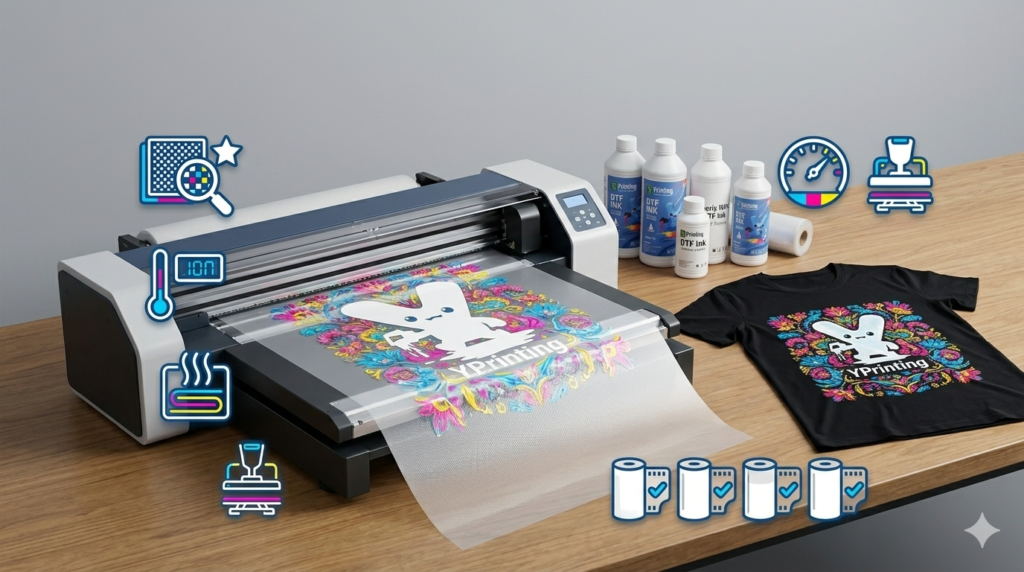
DTF Film Guide: 7 Tips for Better Print Results
Choosing the right film is one of the most important decisions in Direct-to-Film (DTF) printing. Many print issues like fading, poor adhesion, cracking, or dull colors, are not caused by ink or heat press settings, but by the film itself.
A reliable DTF Film Guide helps you understand what actually impacts print quality so you can avoid wasted materials and improve consistency from the start.
1. Hot Peel vs Cold Peel Film
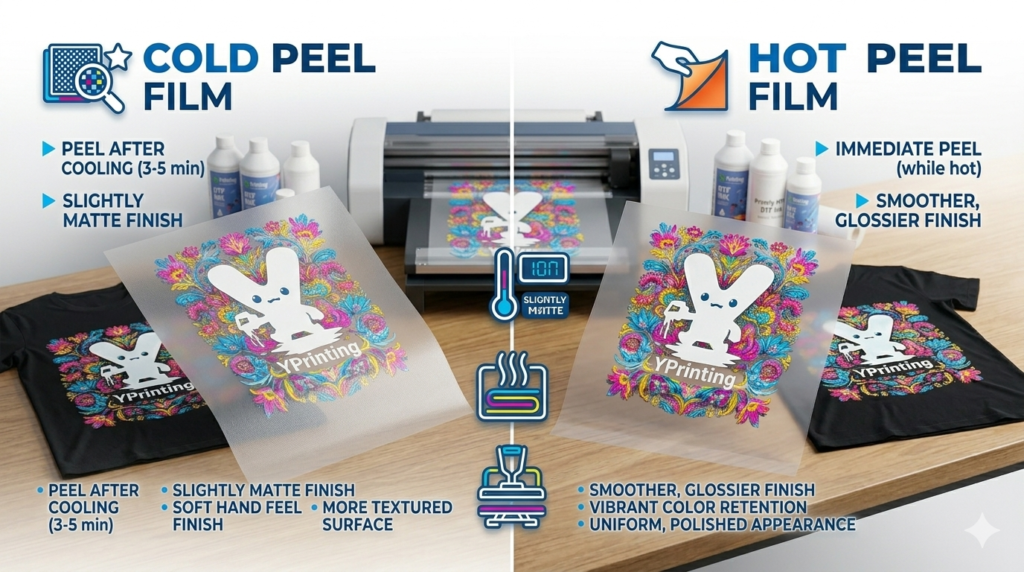
One of the first choices you will make is between hot peel and cold peel DTF film. Both work well, but they behave differently during production.
Hot peel film allows you to remove the film immediately after pressing. This speeds up workflow and is ideal for high volume production environments where efficiency matters.
Cold peel film requires the transfer to cool completely before peeling. While slower, it often produces sharper detail, stronger adhesion, and a smoother finish on fabric.
In general:
Hot peel equals faster production and slightly less forgiveness
Cold peel equals higher detail, stronger finish, and slower workflow
Choosing the right type depends on your production goals rather than one being universally better.
2. Film Coating Quality Matters Most
The coating on DTF film is what holds the ink before transfer. This layer directly impacts color vibrancy, detail sharpness, and adhesion strength.
High quality film coating should:
Hold ink evenly without spreading
Dry consistently without smudging
Release cleanly during pressing
Low quality film often leads to:
Ink bleeding or spreading
Patchy or inconsistent prints
Weak bonding to fabric after transfer
Even with perfect printer settings, poor film coating will limit your final result.
3. Compatibility with Ink and White Ink Performance
Your film must work well with your ink system, especially white DTF ink, which is the foundation layer in most transfers.
If the film does not interact properly with white ink, you may notice:
Uneven opacity
Weak underbase coverage
Color dullness on dark garments
A proper DTF Film Guide always emphasizes testing film with your exact ink setup. Small differences in coating chemistry can dramatically affect results.
4. Thickness and Handling
DTF films come in different thickness levels, usually measured in microns. Thickness affects both handling and final print feel.
Thicker films are easier to handle, less prone to curling, and great for beginners
Thinner films are more flexible, give a softer finish on garments, and are preferred for advanced users
For most small businesses, a medium weight film provides the best balance of durability and ease of use.
5. Anti Static Properties Reduce Printing Issues
Static electricity is often overlooked in DTF printing. It can attract dust, cause ink misalignment, and create small imperfections in the design.
High quality films include anti static coating, which helps:
Reduce dust attraction during printing
Improve print clarity and consistency
Prevent micro defects in detailed designs
This is especially important in dry environments or high speed production setups where static buildup is more common.
6. Fabric Compatibility Testing
A strong DTF film should perform well across multiple fabric types including cotton, polyester, and blended materials.
Before committing to bulk production, test your film on:
100 percent cotton shirts
Polyester athletic wear
Cotton polyester blends
Look for:
Strong adhesion after washing
No cracking when stretched
Smooth finish without lifting edges
If results vary widely between fabrics, the issue may be film quality rather than your heat press settings.
7. Peel Quality and Final Finish
The final step in evaluating film is how cleanly it releases after pressing.
Good film should:
Peel smoothly without sticking
Leave sharp defined edges
Maintain vibrant color after transfer
Poor quality film often leaves:
Residue on fabric
Faded or washed out colors
Uneven edges or lifting corners
This step is where customers notice the difference between a professional grade product and a low quality print.
A reliable DTF Film Guide is not just about choosing a product. It is about understanding how each factor affects your final print.
To consistently produce high quality transfers, focus on:
Coating quality and consistency
Compatibility with your ink system
Proper peel type for your workflow
Real testing across fabrics
Anti static and handling performance
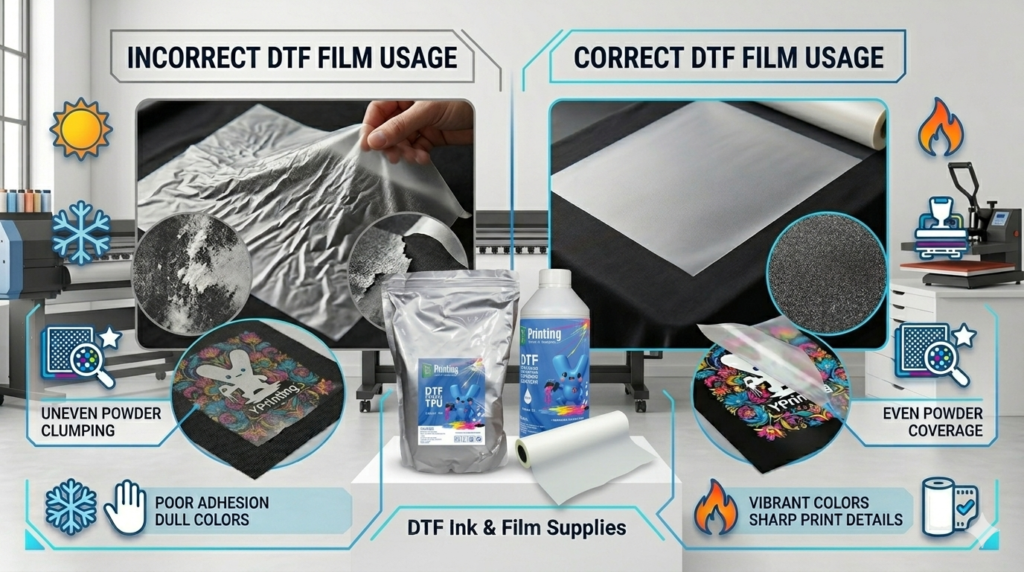
When your film is right, everything else in your workflow becomes easier. Color accuracy improves, adhesion becomes more reliable, and production issues decrease significantly.
At Y Printing, we provide industry grade DTF supplies designed to maximize performance and consistency, helping you scale your printing business with confidence.